
Youth on the Summit: a week in the Dolomites to envision the future of mountain areas
Businesses, traditions and communities starting again from the mountains: the Erasmus+ youth exchange in the Agordino
From 23 to 29 October 2026, between Frassené and the Agordo area, in the heart of the Belluno Dolomites, thirty young people from mountain regions of six European countries met for the Giovani in Vetta youth exchange, the Erasmus+ KA152-YOU project coordinated by Mimma Dreams APS.
Why start from the mountains
Mountain communities in the Alpine arc live a contradiction: areas rich in resources, traditions and identity, but with few real opportunities for those who are twenty. Depopulation, shrinking services, less access to training and work, more fragile social networks. An analysis by the European Commission’s Joint Research Centre describes these contexts as “lonely places”.
Giovani in Vetta started from here, from the needs reported by organizations that work every day with young people in these areas, and tried to flip the question: what if local resources were the lever to start again?
Six countries, one network
Alongside Mimma Dreams APS (Italy), partner organizations from Slovenia, Croatia, Austria, Germany and France took part: different realities, united by work with young people in mountain communities. For a week the thirty participants lived, worked and ate together, mixing languages, experiences and ways of looking at the mountains.
Intercultural evenings
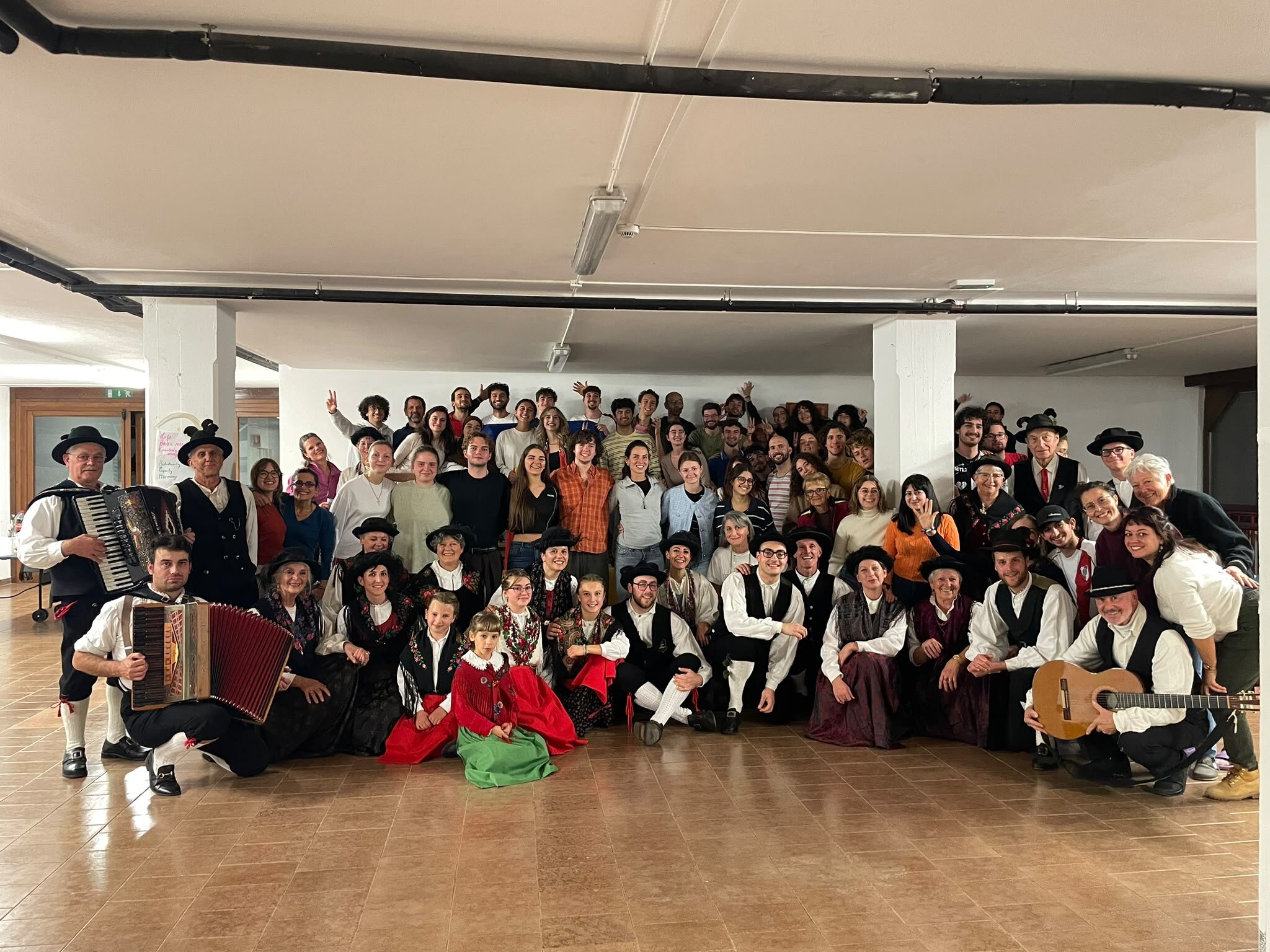
Each day ended with an intercultural night, at 8:30 pm, after dinner. Each evening was dedicated to one country, so that each national group could share something about itself with the others: on 23 October it was Slovenia’s turn, on the 24th Croatia, on the 25th Austria, on the 26th Germany, on the 27th France and on the 28th Italy.
The last evening, the Italian one, was also the richest. At 8:30 pm, live music by a group of Ladins in traditional costume. The Ladins are a historic linguistic minority of the Dolomites, with their own culture made of language, music and dress. For participants arriving from other European countries it was a direct encounter with the identity of the area hosting them, just as during the day they reflected on traditions, trades and belonging.
The intercultural evenings provided a counterpoint to the work of mornings and afternoons: after describing their own area as a group, participants could share it informally, among food, music and conversations.
A week of workshops and trails
The program alternated non-formal methods, local visits and meetings with those who live and work in the mountains.
The days followed a steady rhythm: breakfast, group tasks and responsibilities, project activities until lunchtime, afternoon activities and, at 6 p.m., a moment of reflection and well-being check-in together with the group leaders. Then dinner and an intercultural evening.
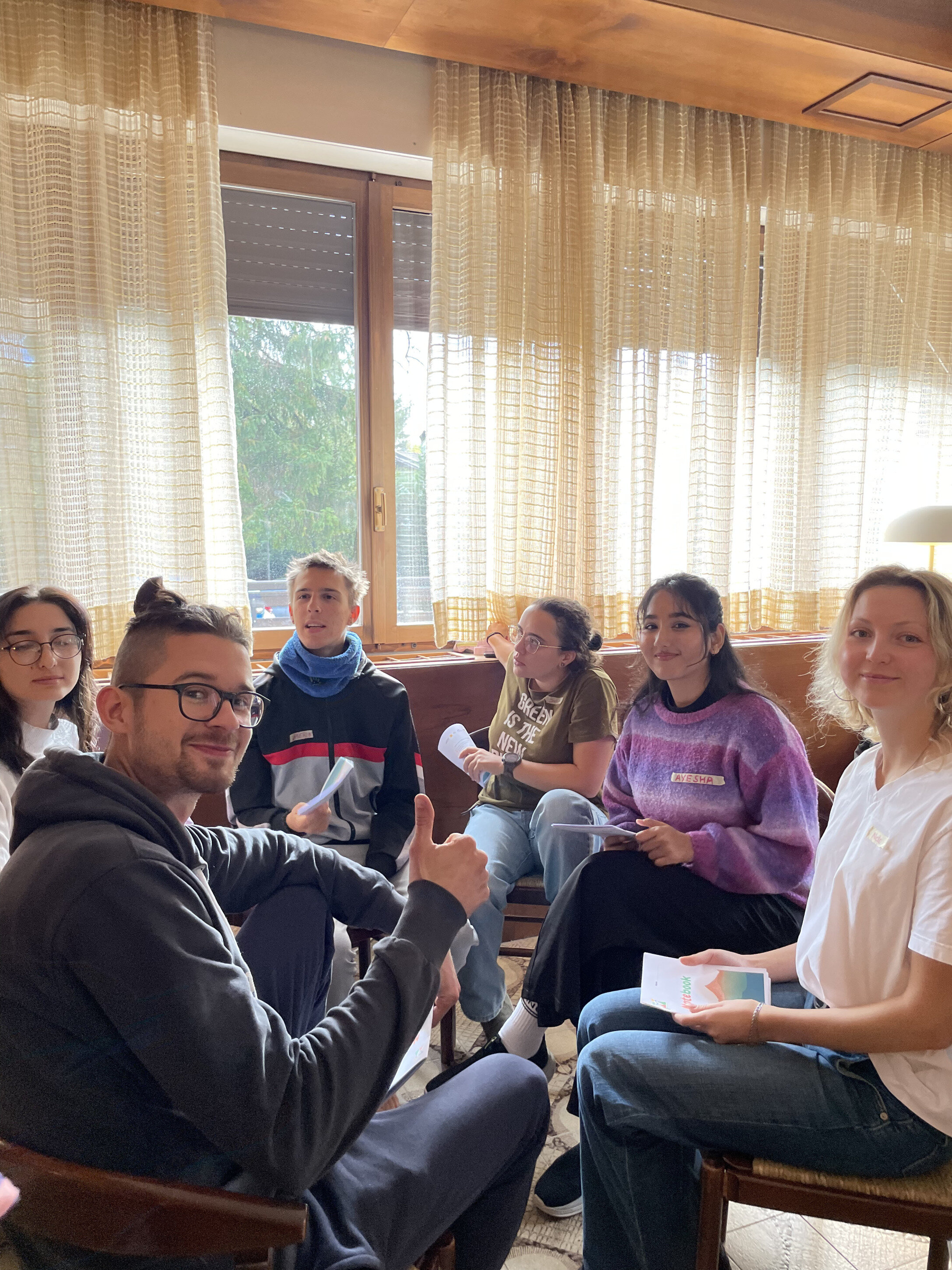
Everyone’s mountain. get-to-know-you and trust games, the presentation of activities, group agreements and learning goals opened the week. The next day the participants, divided into groups of six, built their own personal map of the mountain: each drew on a poster the line that links them to a mountain at the center, marking the key points of their relationship with it. Fifteen minutes of discussion, then each group reported at least two shared elements.
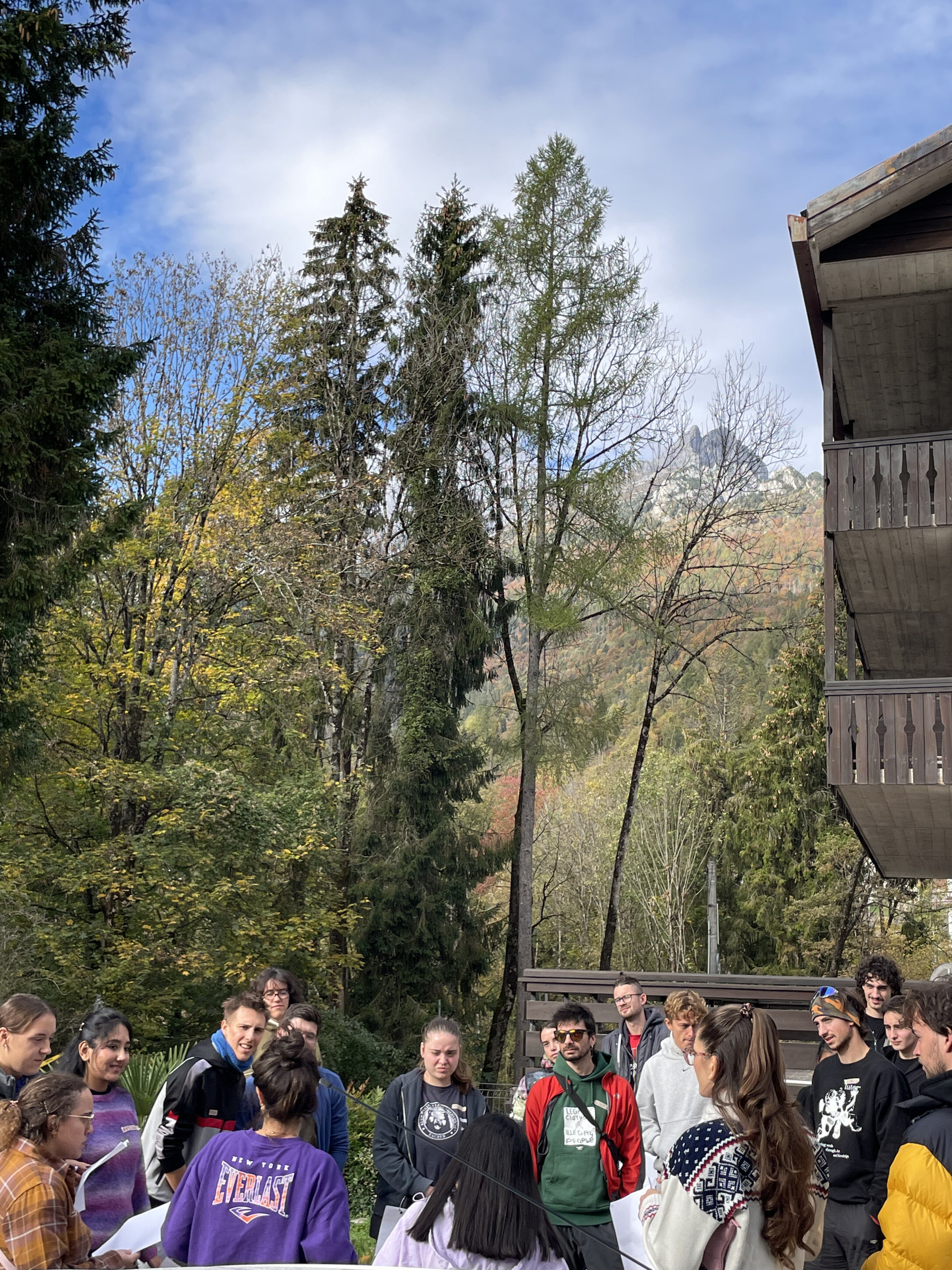
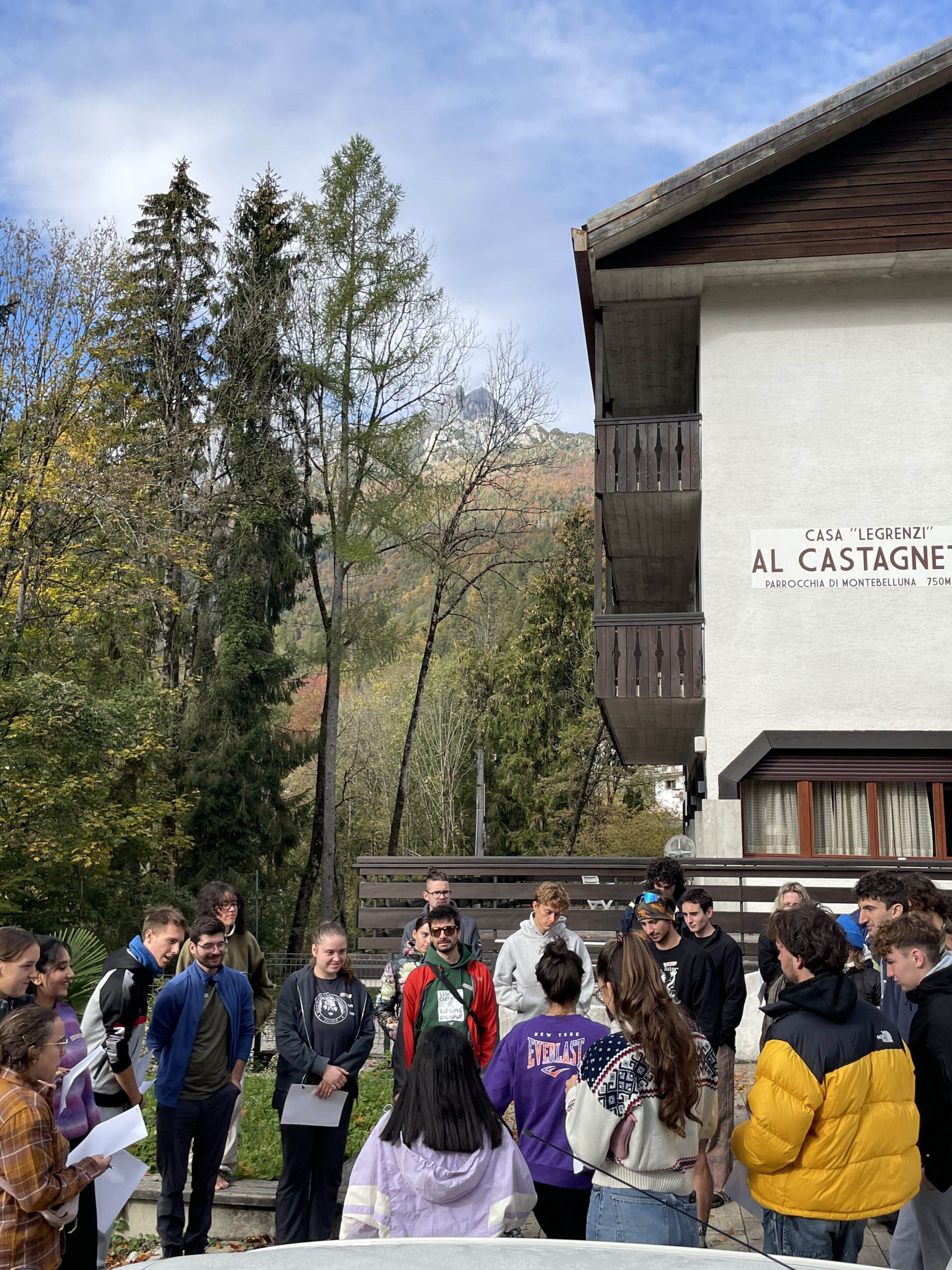
In the afternoon a walk brought attention to the environment, local life and respect for nature. The next day the ideas returned in a guided reflection: each person chose a detail noticed during the outing and drew or described it, completing three sentences ("I noticed...", "It made me understand or ask...", "To respect this environment I can..."). After comparing in pairs, the cards were hung on the wall and grouped by themes: biodiversity, daily life, work, accessibility, care for the land. The result was a map of learnings and concrete behaviors.
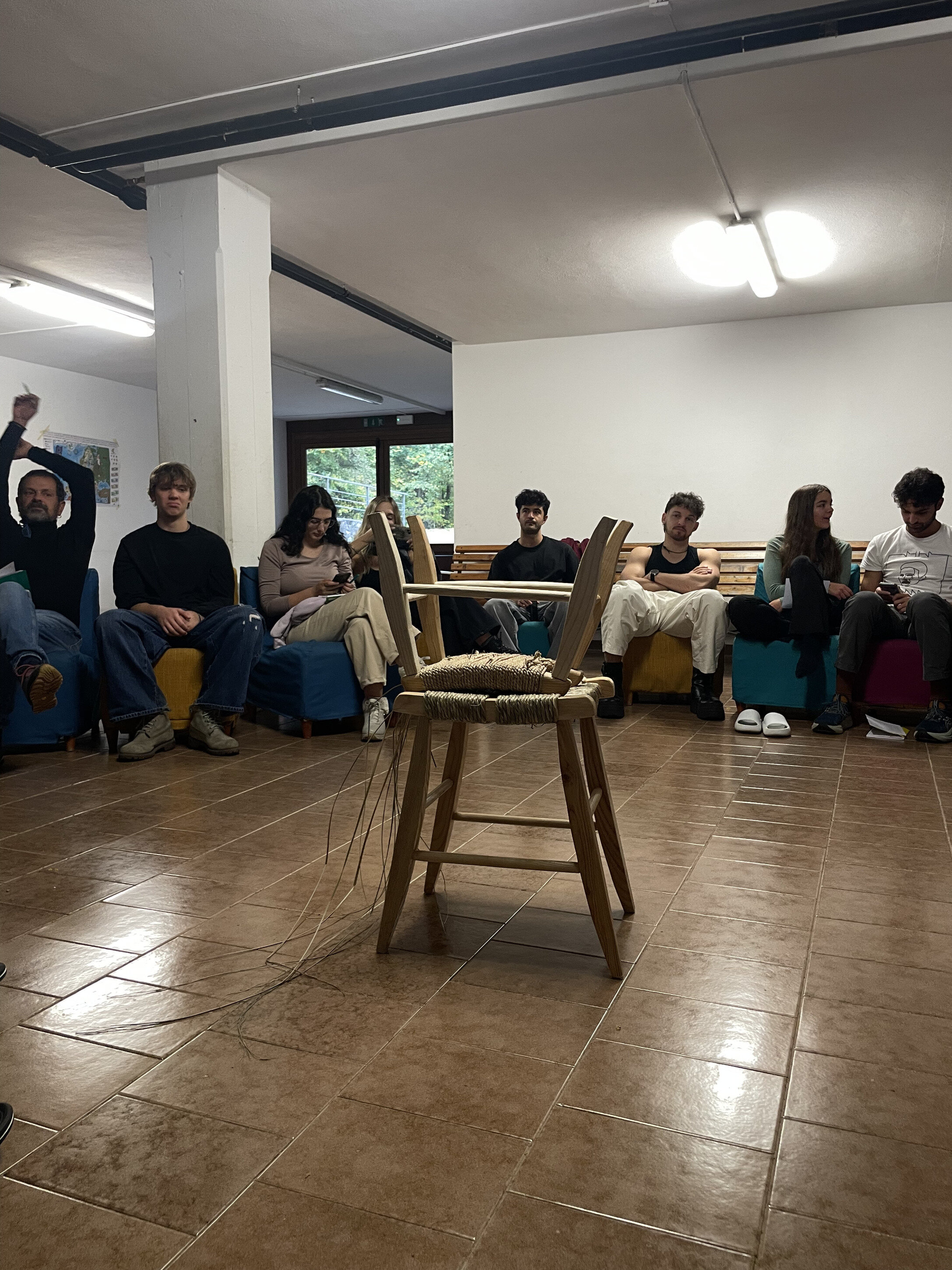
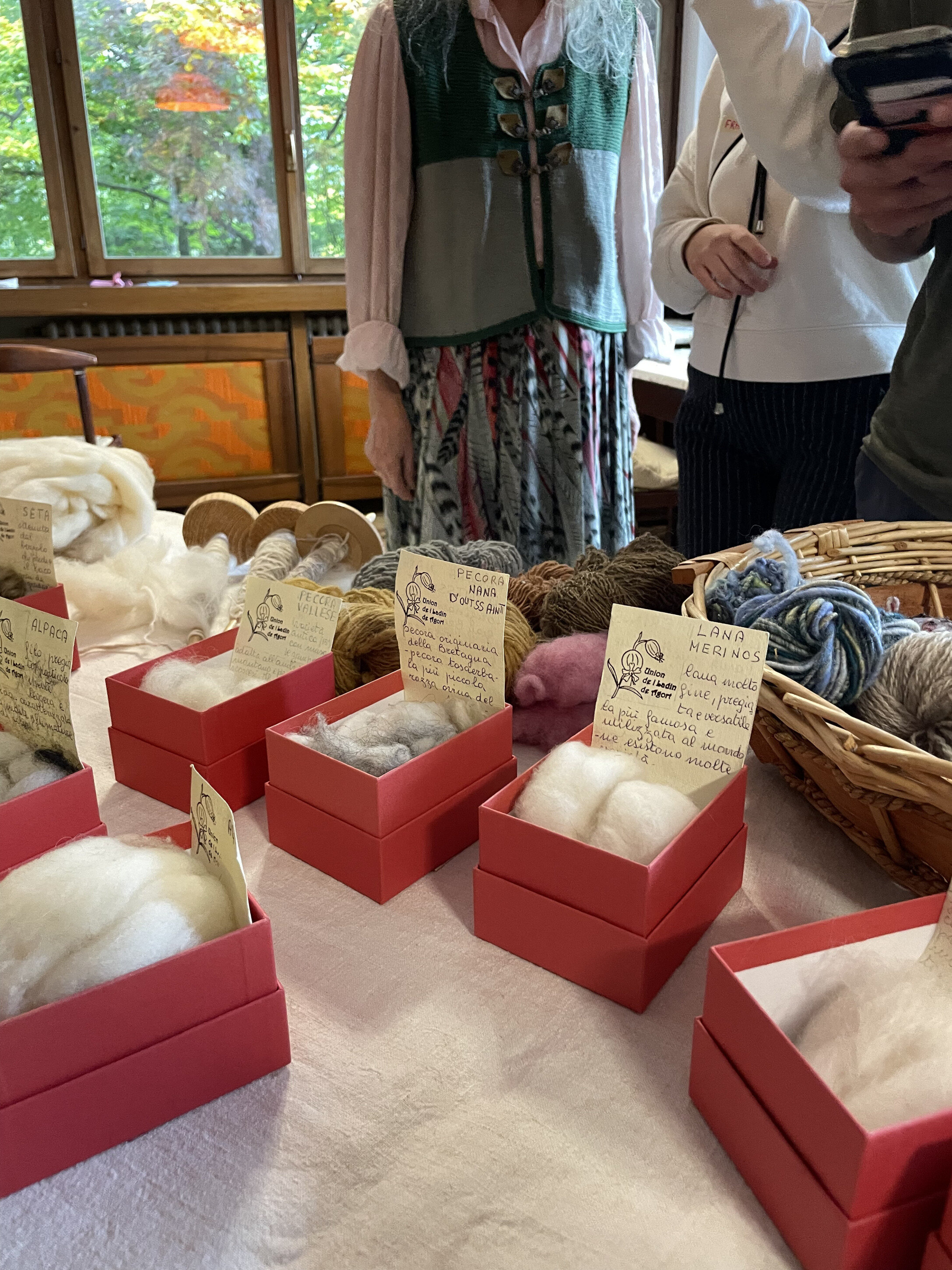
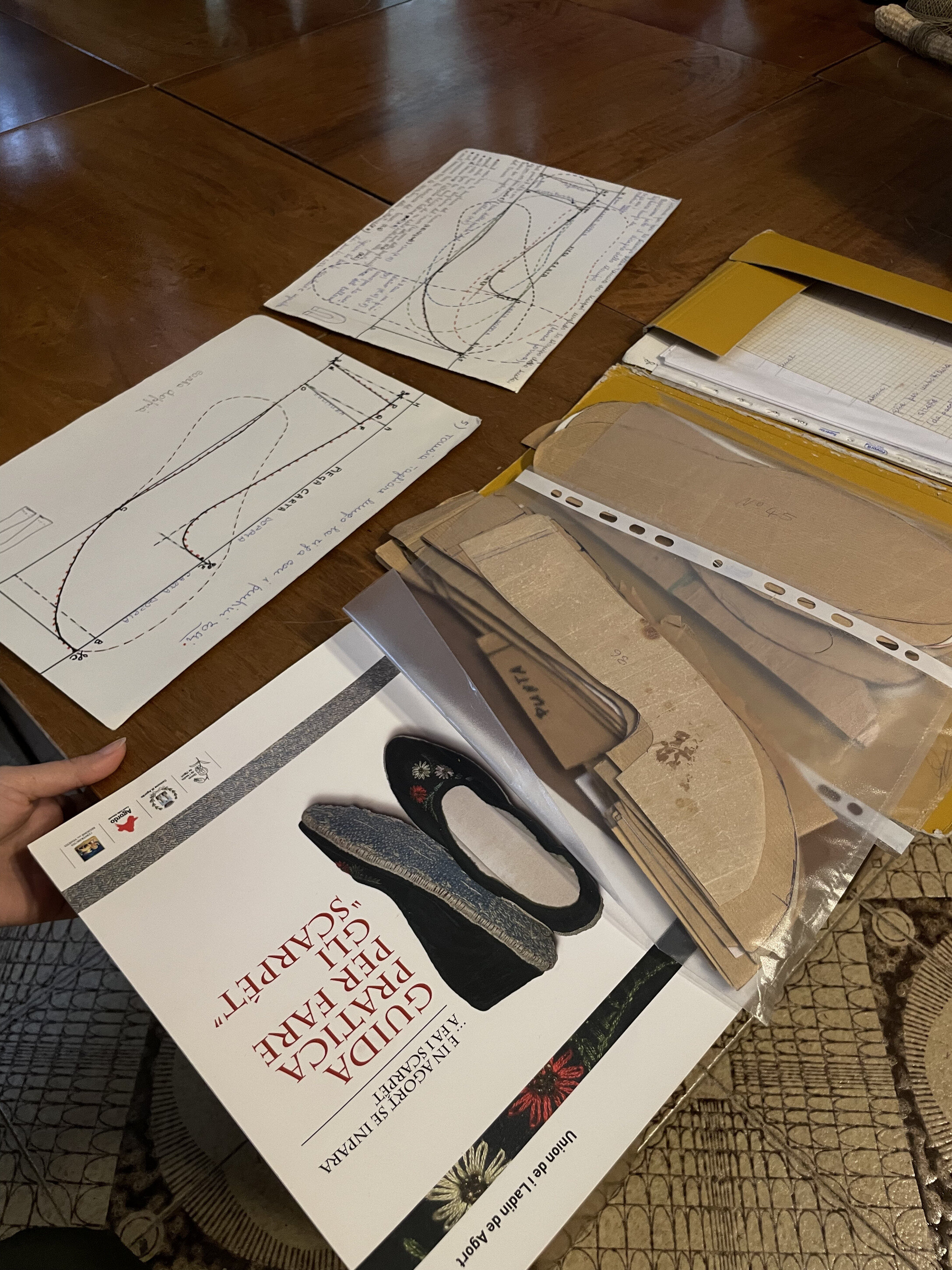
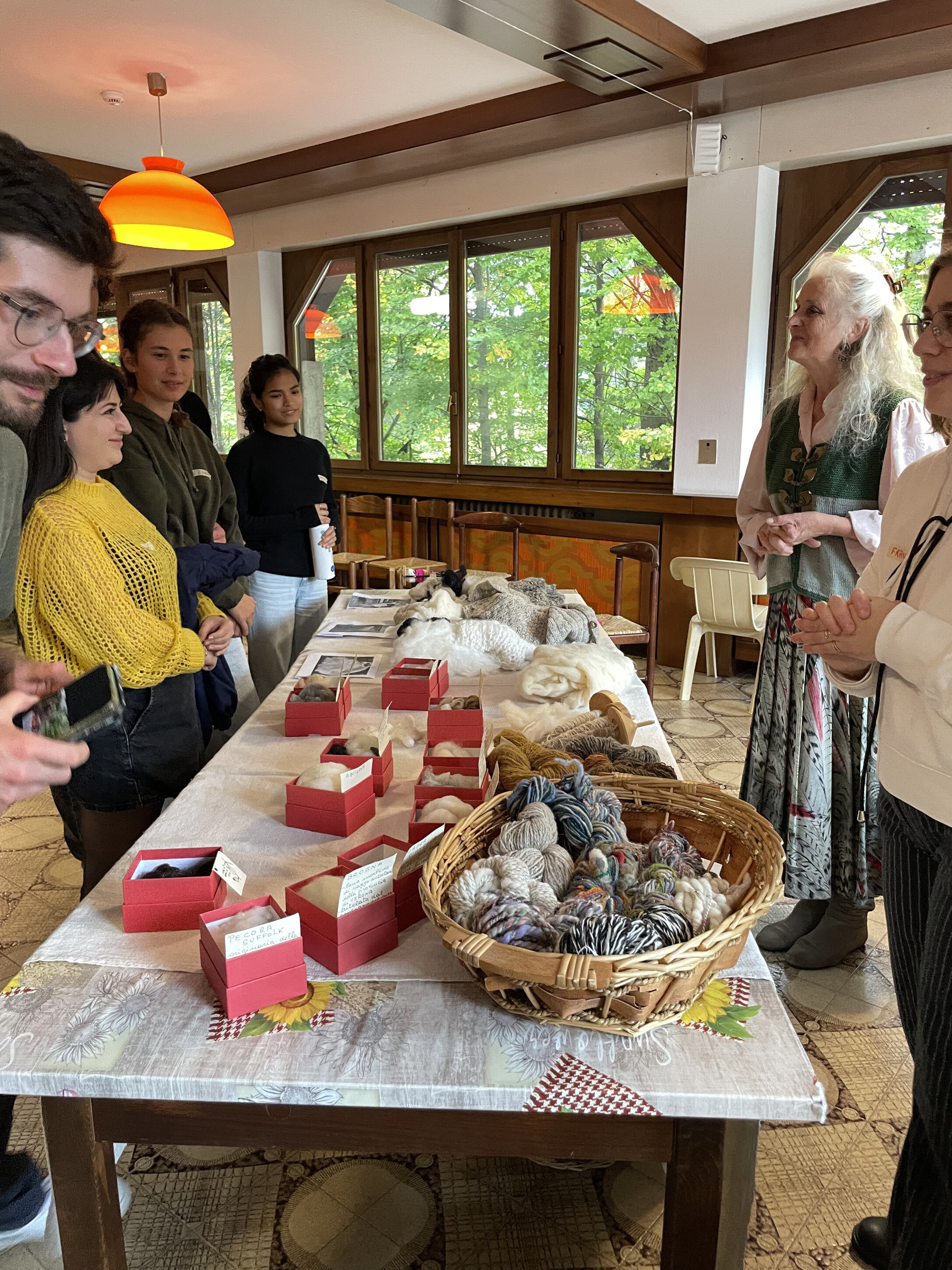
Local trades and know-how. On the afternoon of 23 October, the young people met local craftspeople to discover jobs and customs from local tradition: the caregheta, the scarpet and the filò. Afterwards, the groups compared traditional and contemporary activities, the skills they require and the opportunities they can offer young people, with short presentations and a shared discussion.
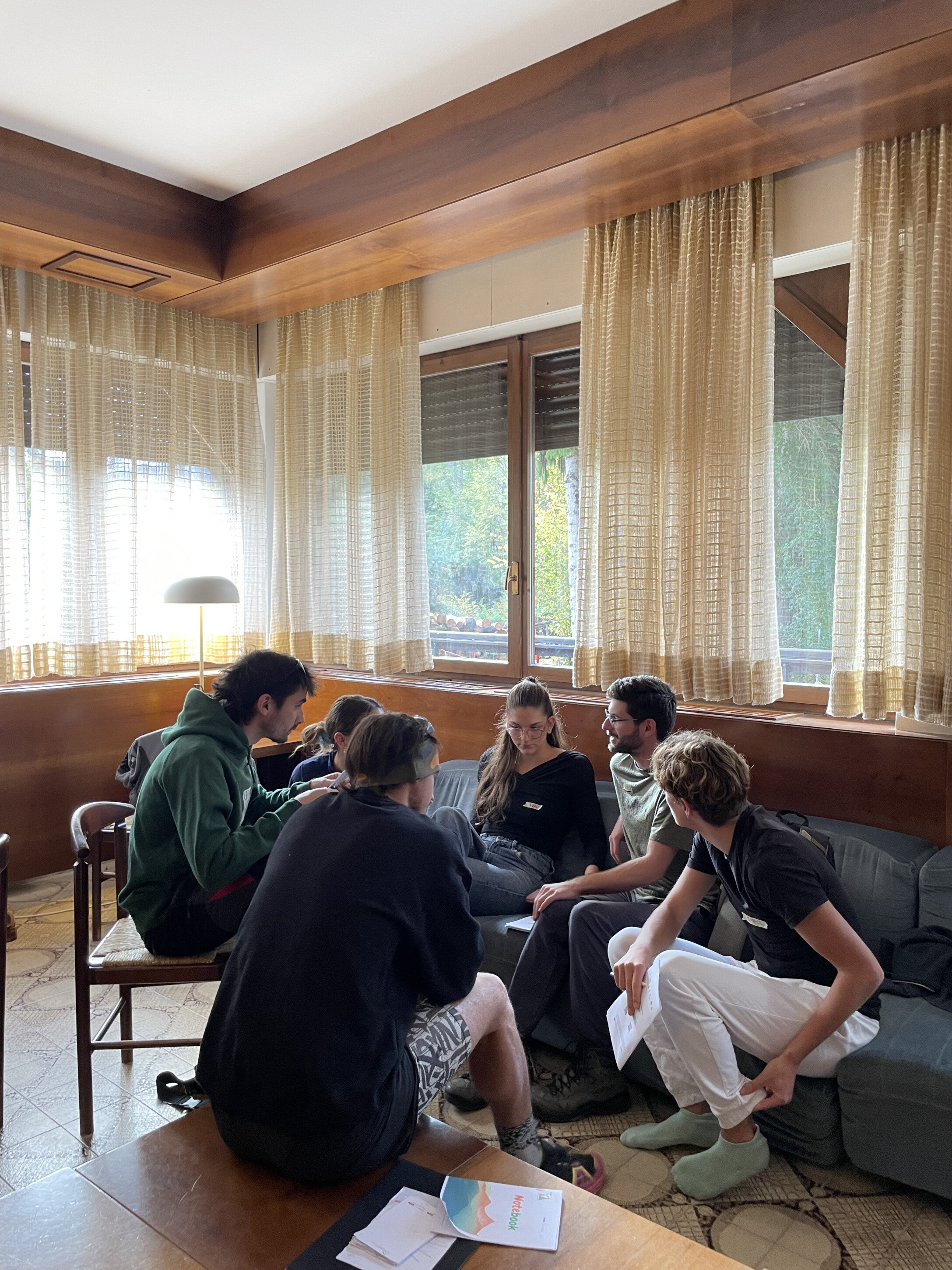
Then the visit to Luxottica’s Eyewear Museum told, in about an hour, the history of eyewear-making and its link with local work. From there the “two lenses” workshop was born. In international groups, each with the outline of a pair of glasses on a flipchart and a perspective to take on (young people from inner mountain areas, workers from rural areas, the local community, the environment), participants worked in four steps:
The two lenses. In the left lens, “What opportunities do we see?”; in the right, “What questions or conditions must we consider?”, distinguishing observed facts from assumptions.
Shift of view. The groups swap sheets and add a point from the perspective assigned to them.
The bridge. Back to their own sheet, they write on the bridge of the glasses a condition to connect productive development and local well-being.
Sharing. Each group presents its own condition.
The aim was to change the way we look at inner areas and spark small ideas for local action.
Stories and maps of the area. On the morning of 25 October the participants, in national groups, worked on the regional home stories. Each person drew on a post-it an object that represents their rural area (a key, a bus, a recipe) and completed the sentence "To understand my area, you need to know this object because...". Then, in pairs, they interviewed each other with questions like "When did you feel part of this place?", "When was living here difficult?" and "What would you like people from outside to know?", noting down one resource and one need that emerged from the other person's story.
Each group turned these materials into a living map of their area: resources on post-its of one colour, needs on another, with at least three links between resources and needs and a question mark on uncertain information.
From ideas to local actions. The project workshop turned inputs into proposals for small local actions, with goals, target groups and roles. The groups improved the proposals by comparing notes with local stakeholders and presenting them briefly. On 28 October the visit to the local market led them to observe products, traditions and links between economy and community, and in Agordo the guided visit to the Dolomia Museum added the geological story of the Dolomites.
The last day was devoted to the Youthpass workshop, to recognise the skills developed, agree on the actions to carry out once back in their communities and evaluate the exchange together. The evening ended with the farewell ceremony and the handing out of the Youthpass.
The project continues until July 2027: the aim is that the peer-built network stays active and that the small actions born this week truly become initiatives in each person's area.